Why Successful Startups Begin with Customer Understanding, Clear Value Creation, and Sustainable Growth—Not Unrealistic Expectations
By Invest Kashmir Editorial Desk / Dr. Bilal Ahmad Bhat, Founder of BAB Group of Companies
Every successful startup begins with optimism.
Founders imagine products that solve meaningful problems, technologies that transform industries, and businesses that improve lives. Entrepreneurship is fueled by ambition, creativity, and the courage to pursue opportunities despite uncertainty.
However, between a promising idea and a successful enterprise lies a challenging journey filled with learning, adaptation, customer discovery, financial discipline, and strategic decision-making.
Many startups struggle not because they lack innovation, but because they begin with unrealistic expectations. Some assume customers will immediately embrace their products. Others expect rapid investment, instant profitability, or viral growth. In reality, sustainable startups are built patiently through customer validation, continuous improvement, disciplined execution, and a compelling value proposition that clearly explains why customers should choose one solution over another.
A startup is fundamentally an organization created to search for and validate a scalable business model. Success depends on understanding customer needs, refining solutions through market feedback, and building a value proposition that delivers measurable benefits.
For Jammu & Kashmir, where entrepreneurship is expanding across tourism, agriculture, horticulture, healthcare, manufacturing, education, renewable energy, handicrafts, information technology, and digital services, understanding these fundamentals can help entrepreneurs build resilient businesses capable of competing nationally and internationally.
Entrepreneurship Begins with Reality
Every entrepreneur dreams of success.
The most successful founders also embrace reality.
Building a business requires:
- Patience
- Persistence
- Continuous learning
- Customer feedback
- Financial discipline
- Adaptability
- Long-term commitment
Success rarely happens overnight.
Businesses grow through consistent execution rather than isolated moments of inspiration.
The Importance of Realistic Expectations
Many entrepreneurs compare their first year with companies that have spent decades building market presence.
This comparison creates unnecessary frustration.
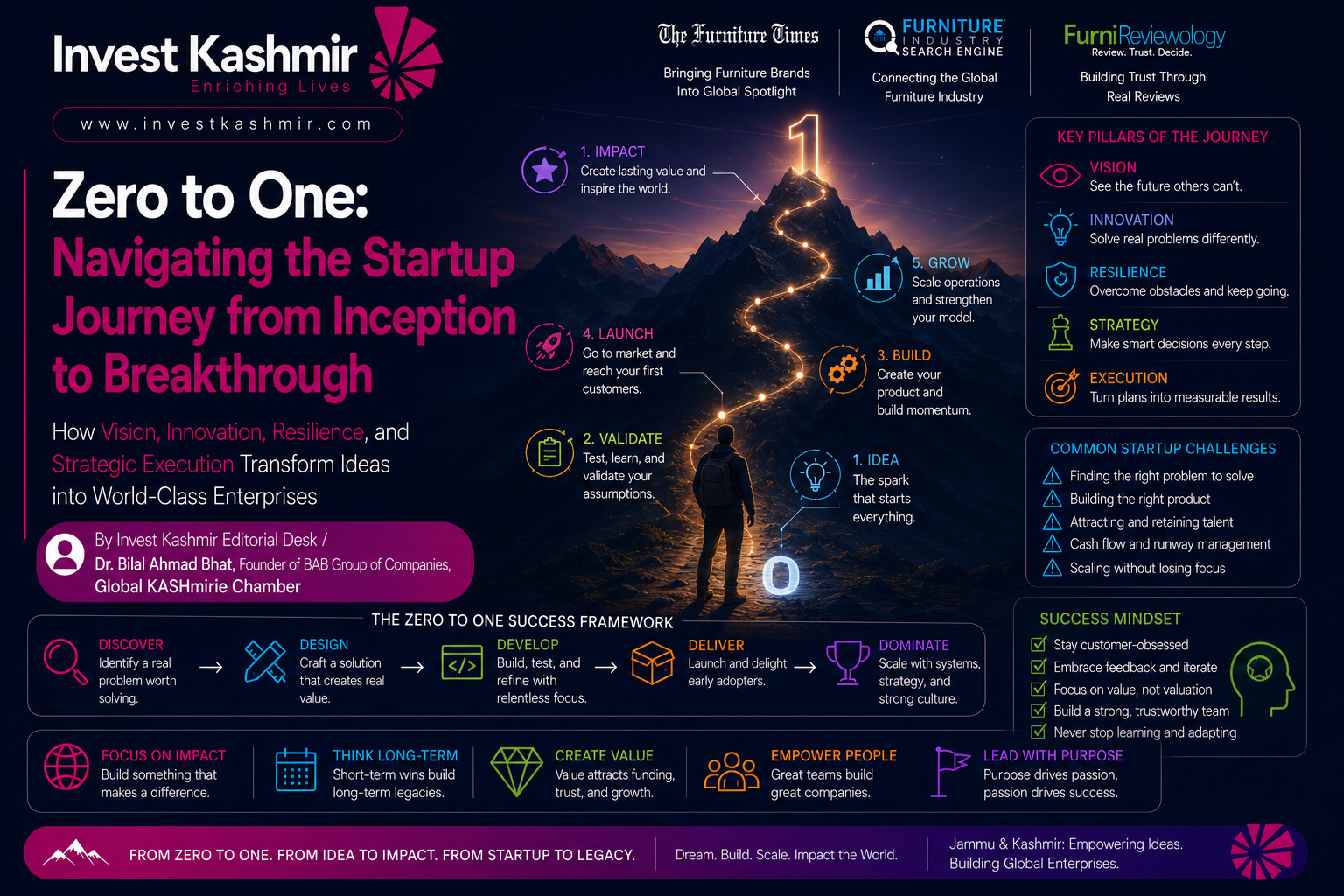
Startups should instead focus on realistic milestones such as:
- Validating customer demand
- Building a minimum viable product
- Acquiring early customers
- Improving product quality
- Generating recurring revenue
- Learning from market feedback
Each milestone contributes to long-term growth.
What Is a Value Proposition?
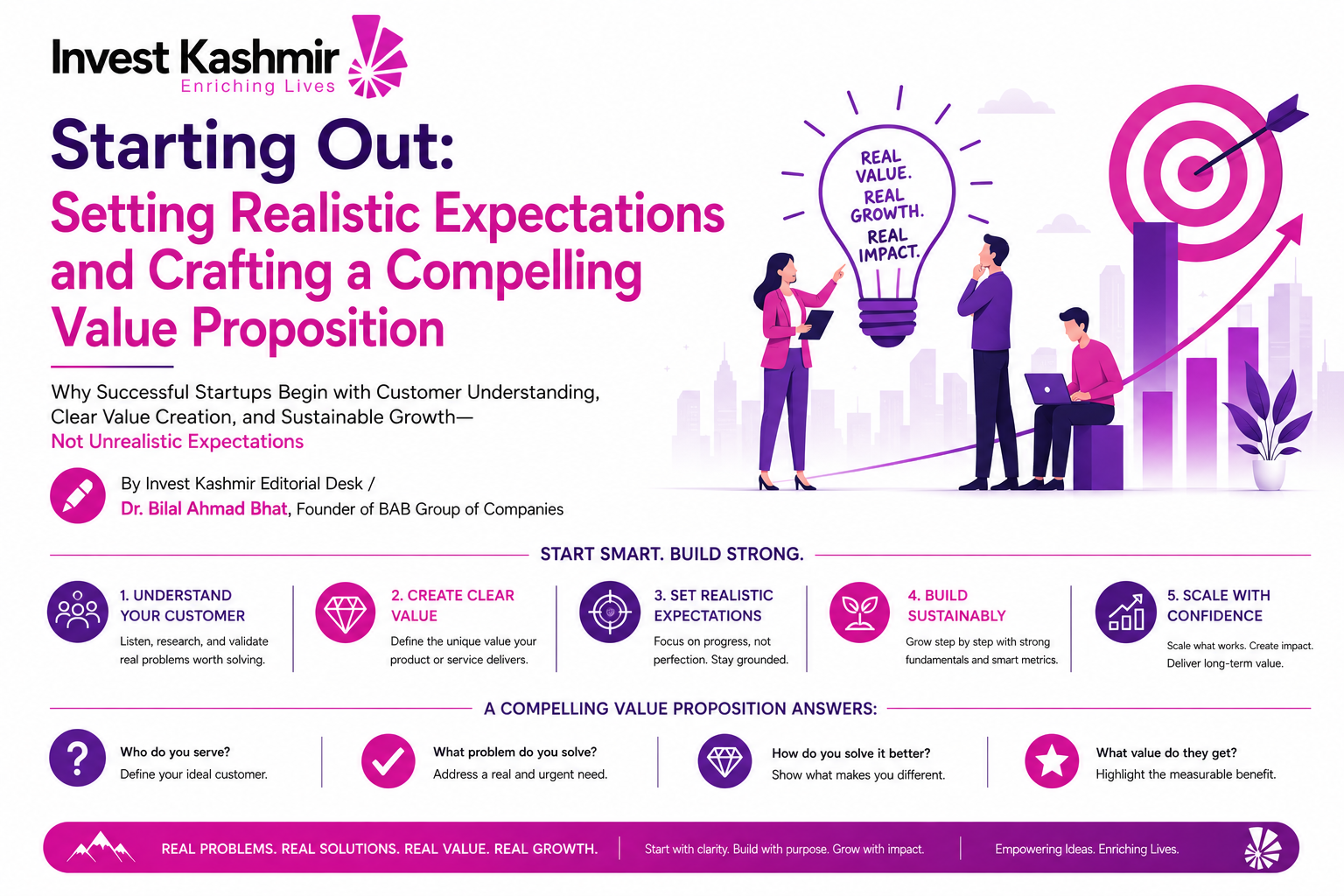
A value proposition is a clear explanation of why customers should choose your product or service instead of available alternatives.
It answers four essential questions:
- What problem do you solve?
- Who do you solve it for?
- What benefits do customers receive?
- Why is your solution different?
A strong value proposition helps businesses communicate their purpose while differentiating themselves in competitive markets.
Customers Buy Solutions, Not Products
Entrepreneurs often become emotionally attached to products.
Customers become interested in solutions.
For example:
Customers do not buy software.
They buy efficiency.
Customers do not buy agricultural technology.
They buy higher productivity.
Customers do not buy healthcare applications.
They buy better health outcomes.
Successful founders focus first on customer problems before discussing product features.
Understanding Customer Needs
Building a compelling value proposition begins with listening.
Entrepreneurs should understand:
- Customer challenges
- Daily frustrations
- Buying behaviour
- Decision-making processes
- Expectations
- Desired outcomes
The deeper the customer understanding, the stronger the business proposition becomes.
Simplicity Creates Clarity
Complex messages confuse customers.
Effective value propositions communicate:
- Clear benefits
- Simple language
- Measurable outcomes
- Distinct differentiation
Customers should immediately understand:
“What value does this business create for me?”
If the answer is unclear, the value proposition needs refinement.
Market Validation Before Scaling
One of the most common startup mistakes is scaling before validation.
Before significant expansion, founders should confirm:
- Customers genuinely need the solution.
- Customers are willing to pay.
- The business model is sustainable.
- Market demand exists.
- Feedback supports continued development.
Early validation reduces risk while improving long-term success.
Building Trust from the Beginning
Customers rarely purchase from unfamiliar businesses without confidence.
Trust develops through:
- Honest communication
- Product quality
- Reliable service
- Transparency
- Consistent branding
- Positive customer experiences
Trust becomes one of a startup’s greatest competitive advantages.
Financial Expectations
Many startups require time before becoming profitable.
Founders should prepare realistic financial plans that consider:
- Operating costs
- Customer acquisition expenses
- Product development
- Marketing investment
- Cash flow
- Growth timelines
Careful financial planning allows entrepreneurs to make informed decisions during periods of uncertainty.
The Power of Continuous Learning
Markets evolve constantly.
Customer preferences change.
Technology advances.
Competitors innovate.
Successful entrepreneurs embrace continuous learning by:
- Monitoring industry trends
- Listening to customers
- Improving products
- Developing new skills
- Adapting business models
Learning becomes a permanent competitive advantage.
Innovation with Purpose
Innovation should solve meaningful problems.
Rather than pursuing technology for its own sake, startups should ask:
- Does this improve customers’ lives?
- Does it reduce costs?
- Does it save time?
- Does it increase efficiency?
- Does it create measurable value?
Purpose-driven innovation builds stronger businesses.
Opportunities for Jammu & Kashmir
Jammu & Kashmir possesses remarkable entrepreneurial potential across:
- Tourism Technology
- AgriTech
- HealthTech
- Artificial Intelligence
- Food Processing
- Renewable Energy
- Horticulture
- Handicrafts
- Education Technology
- Manufacturing
- Digital Commerce
Each of these sectors offers opportunities for startups capable of addressing real customer needs with compelling value propositions.
Universities and Startup Development
Educational institutions can strengthen entrepreneurship by supporting:
- Business incubation
- Innovation labs
- Startup competitions
- Industry partnerships
- Research commercialization
- Entrepreneurship education
These initiatives help aspiring founders test ideas before entering competitive markets.
Investors Seek More Than Ideas
Professional investors rarely invest solely in ideas.
They evaluate:
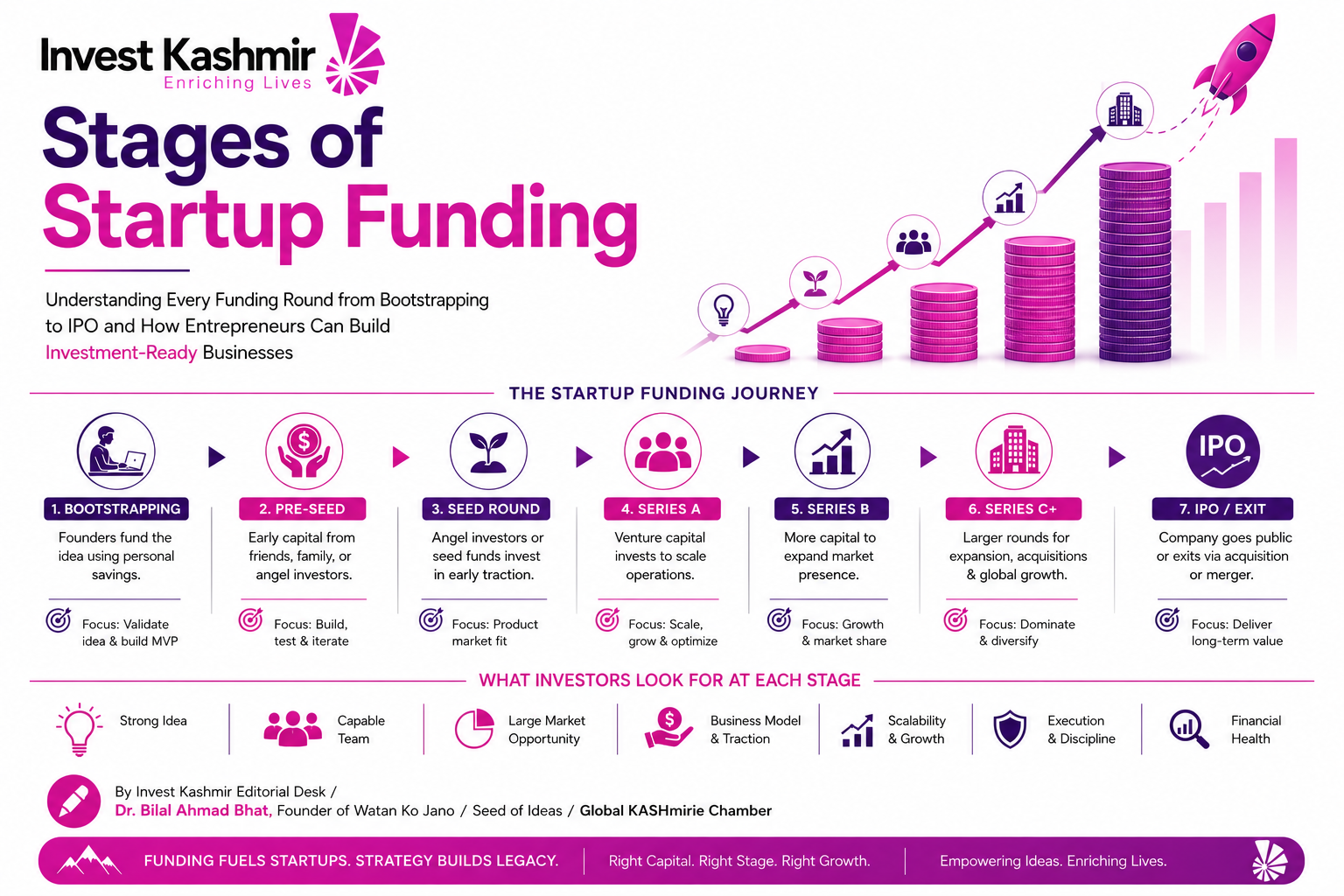
- Market opportunity
- Founder capability
- Customer validation
- Revenue potential
- Competitive advantage
- Value proposition
- Financial discipline
- Scalability
Businesses with validated customer demand and a clearly articulated value proposition often present stronger investment opportunities.
Building a Sustainable Startup Ecosystem
A thriving entrepreneurial ecosystem depends upon collaboration among:
- Entrepreneurs
- Investors
- Universities
- Incubators
- Accelerators
- Government agencies
- Financial institutions
- Industry associations
Together, these stakeholders help startups transform ideas into sustainable businesses.
Looking Ahead
Every successful company once began as an uncertain idea.
What separated successful founders from unsuccessful ones was rarely luck.
It was their willingness to:
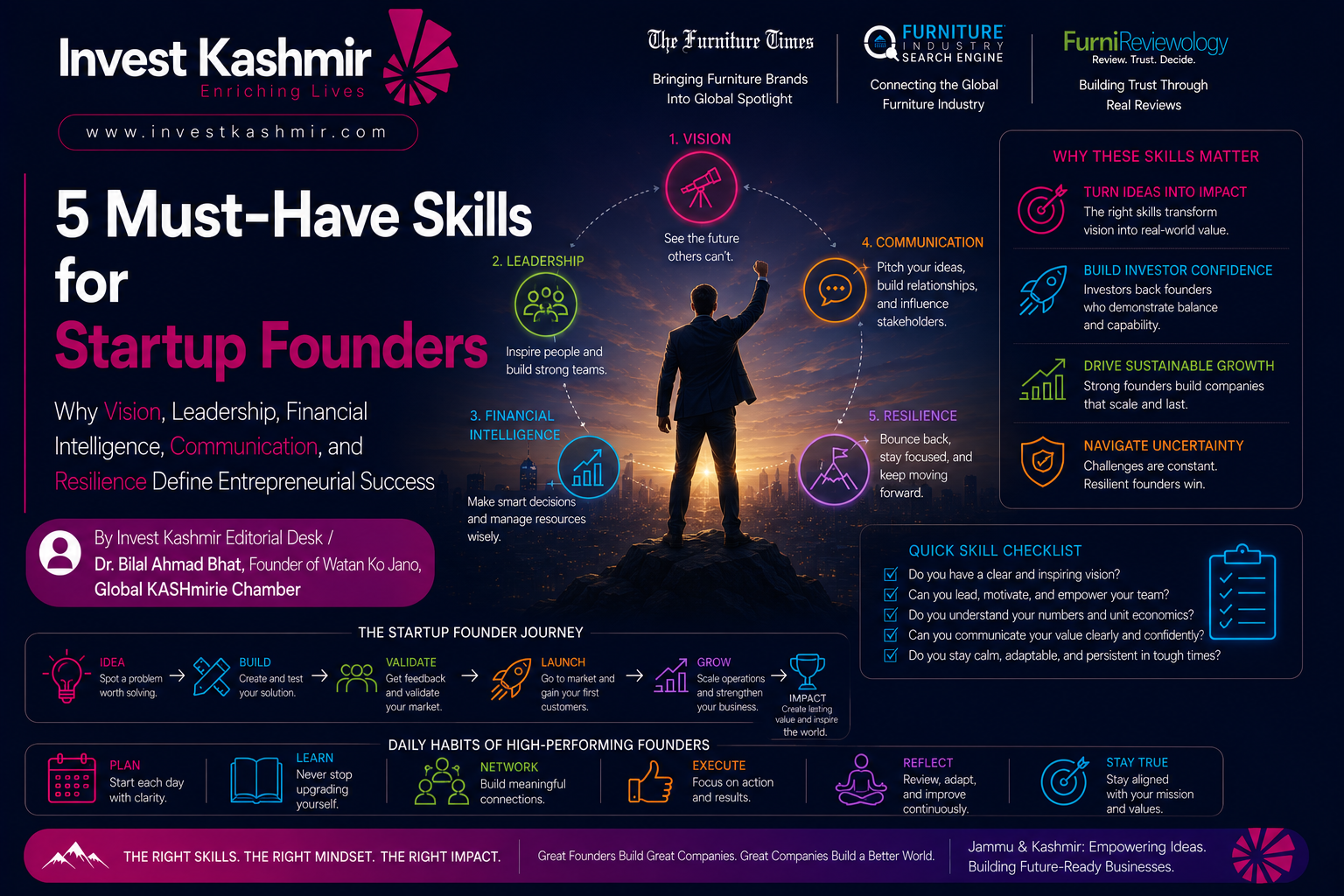
- Learn continuously.
- Listen carefully.
- Adapt quickly.
- Manage expectations.
- Deliver consistent value.
For Jammu & Kashmir, the future of entrepreneurship depends not only on innovative ideas but also on disciplined execution, customer understanding, and sustainable business practices.
The strongest startups are not those with the loudest marketing campaigns.
They are the businesses that consistently solve meaningful problems, earn customer trust, refine their value proposition, and grow responsibly over time.
Ideas create possibilities.
Value creates customers.
Trust creates businesses.
And realistic expectations create entrepreneurs capable of building companies that endure for generations.