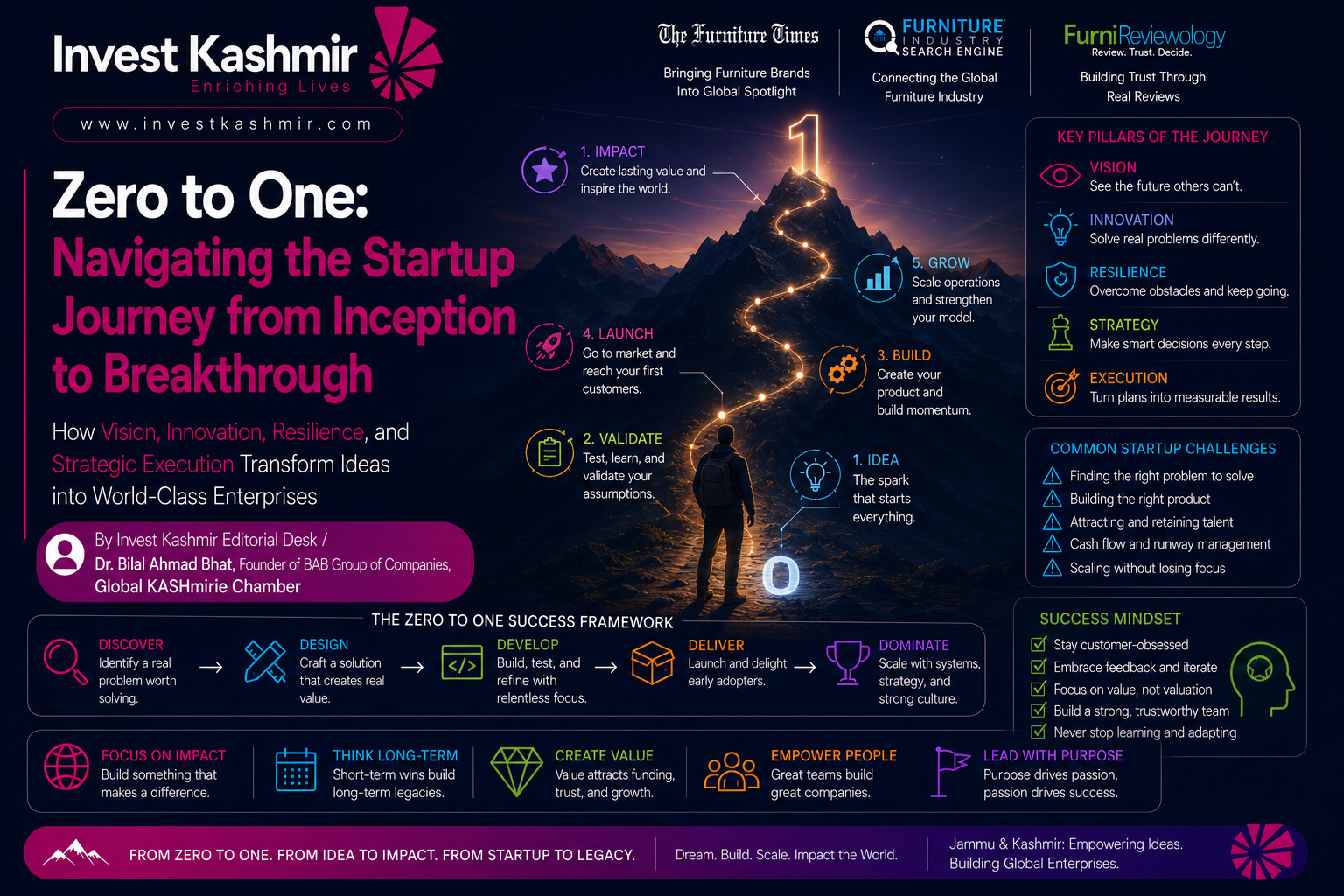
How Vision, Innovation, Resilience, and Strategic Execution Transform Ideas into World-Class Enterprises
By Invest Kashmir Editorial Desk / Dr. Bilal Ahmad Bhat, Founder of BAB Group of Companies, Global KASHmirie Chamber
Every successful company once existed only as an idea.
There was no office.
No customers.
No revenue.
No investors.
No media attention.
Only a founder who believed that a problem deserved a better solution.
This remarkable transformation—from an idea in someone’s imagination to a business capable of changing industries—is what defines the entrepreneurial journey.
The transition from zero to one is not merely about launching a company.
It is about creating something that did not exist before.
It is about transforming uncertainty into opportunity, innovation into value, and vision into measurable impact.
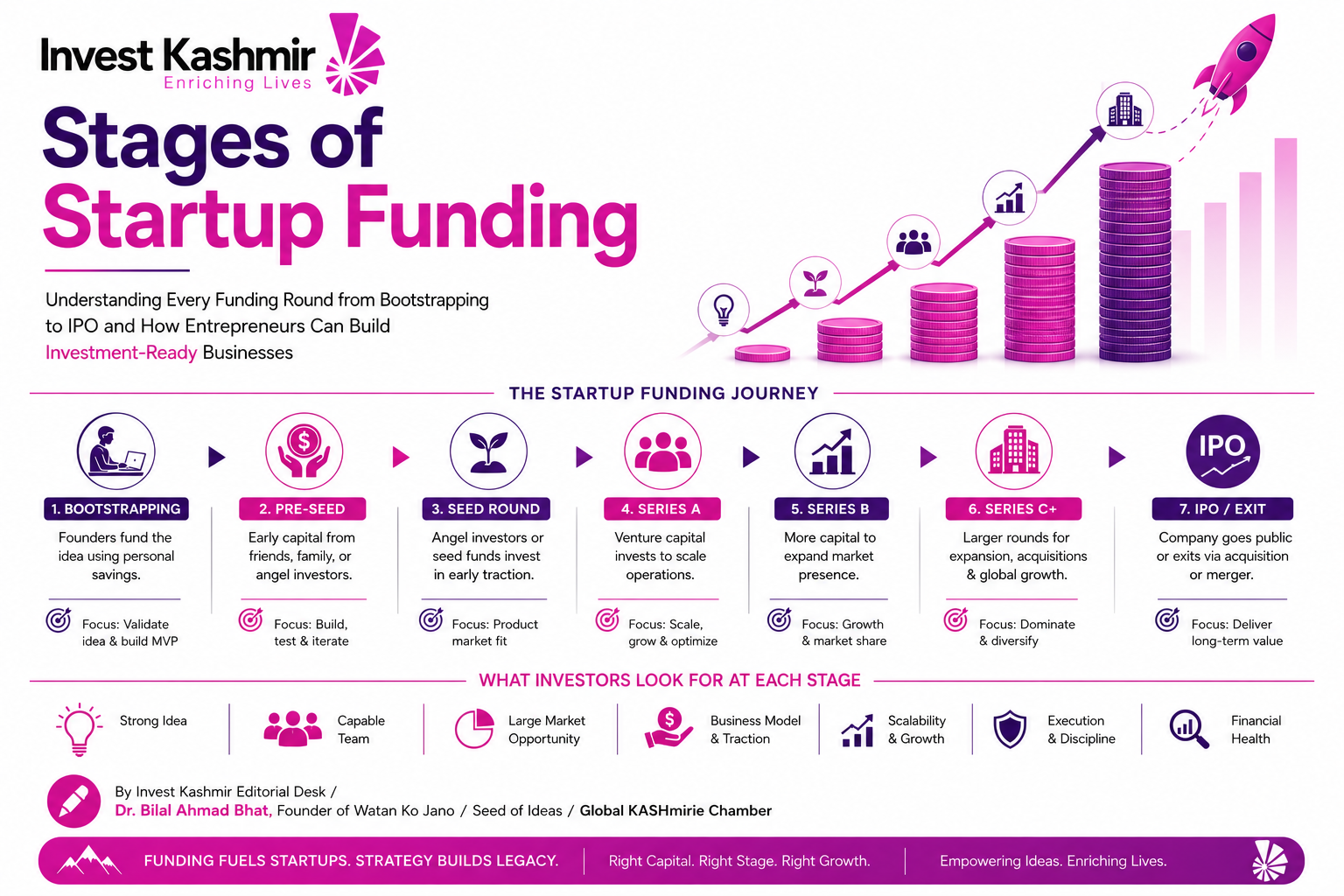
Every startup follows a unique path, yet most successful ventures progress through common stages that include problem discovery, validation, product development, customer acquisition, growth, and scaling. Each stage requires different decisions, leadership skills, financial discipline, and strategic priorities.
For Jammu & Kashmir, where entrepreneurship is rapidly emerging across Tourism Technology, AgriTech, HealthTech, Artificial Intelligence, Renewable Energy, Manufacturing, Food Processing, Education Technology, Handicrafts, and Digital Commerce, understanding the startup journey is essential for building globally competitive enterprises capable of generating employment, attracting investment, and strengthening regional economic development.
Every Startup Begins with a Problem
The greatest businesses rarely begin with technology.
They begin with a problem.
Entrepreneurs observe:
- Customer frustrations.
- Inefficient systems.
- Market gaps.
- Unmet needs.
- Changing behaviour.
Innovation begins when founders ask:
“How can this problem be solved better?”
The strongest startups solve problems that customers genuinely care about.
Stage One: Discovering the Opportunity
Every entrepreneurial journey begins with observation.
Founders should understand:
- Customer pain points.
- Industry trends.
- Market opportunities.
- Competitive landscape.
- Future demand.
Ideas become stronger when they emerge from careful customer understanding rather than assumptions.
Stage Two: Validating the Idea
Not every idea becomes a business.
Validation helps founders determine whether customers truly need the proposed solution.
Validation may include:
- Customer interviews.
- Surveys.
- Market research.
- Prototype testing.
- Pilot projects.
- Early feedback.
Validation reduces uncertainty before significant financial resources are invested.
Modern startup methodologies emphasize validating customer demand before extensive product development to reduce risk and improve product-market fit.
Stage Three: Building the Minimum Viable Product
A Minimum Viable Product (MVP) is not the final product.
It is the simplest version capable of solving the customer’s core problem.
The objective is to:
- Learn quickly.
- Gather feedback.
- Improve continuously.
- Reduce development costs.
Perfect products rarely emerge from the first attempt.
Successful products evolve through customer learning.
Stage Four: Finding Product-Market Fit
Product-market fit occurs when customers consistently recognize value and continue using or purchasing the solution.
Indicators include:
- Customer retention.
- Positive feedback.
- Repeat purchases.
- Organic referrals.
- Revenue growth.
This milestone often marks the transition from experimentation to sustainable business development.
Stage Five: Building a Business Model
A great product alone does not create a successful company.
Founders must establish:
- Revenue generation.
- Pricing strategy.
- Distribution channels.
- Customer acquisition.
- Operational efficiency.
- Financial sustainability.
A scalable business model enables long-term growth.
Stage Six: Building the Right Team
Entrepreneurship is rarely an individual achievement.
Successful startups require talented people who contribute:
- Technical expertise.
- Product development.
- Marketing.
- Sales.
- Finance.
- Operations.
- Customer support.
Strong organizational culture attracts exceptional talent while supporting long-term growth.
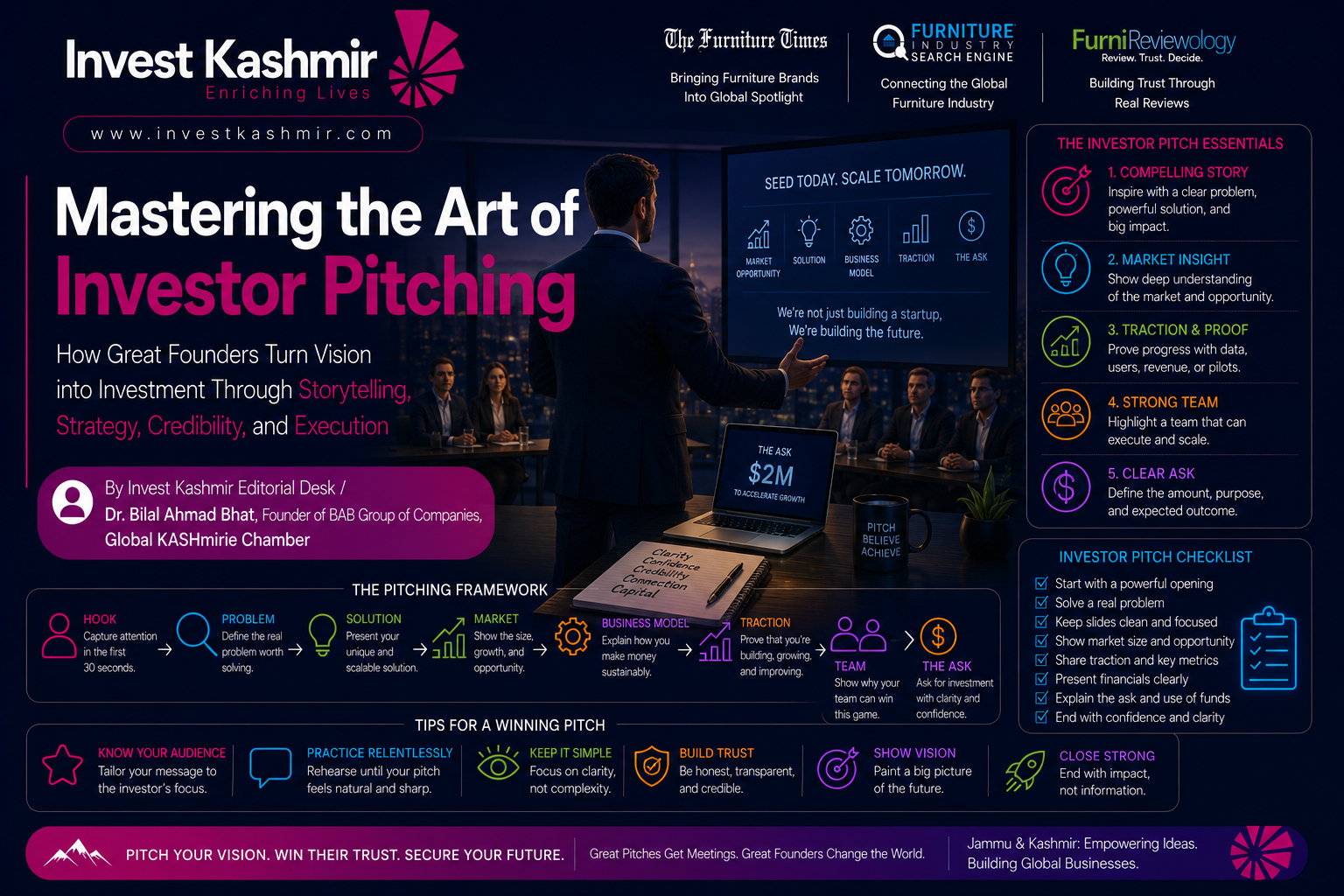
Stage Seven: Securing Funding
Different startups require different financing strategies.
Funding options may include:
- Bootstrapping.
- Friends and family.
- Angel investors.
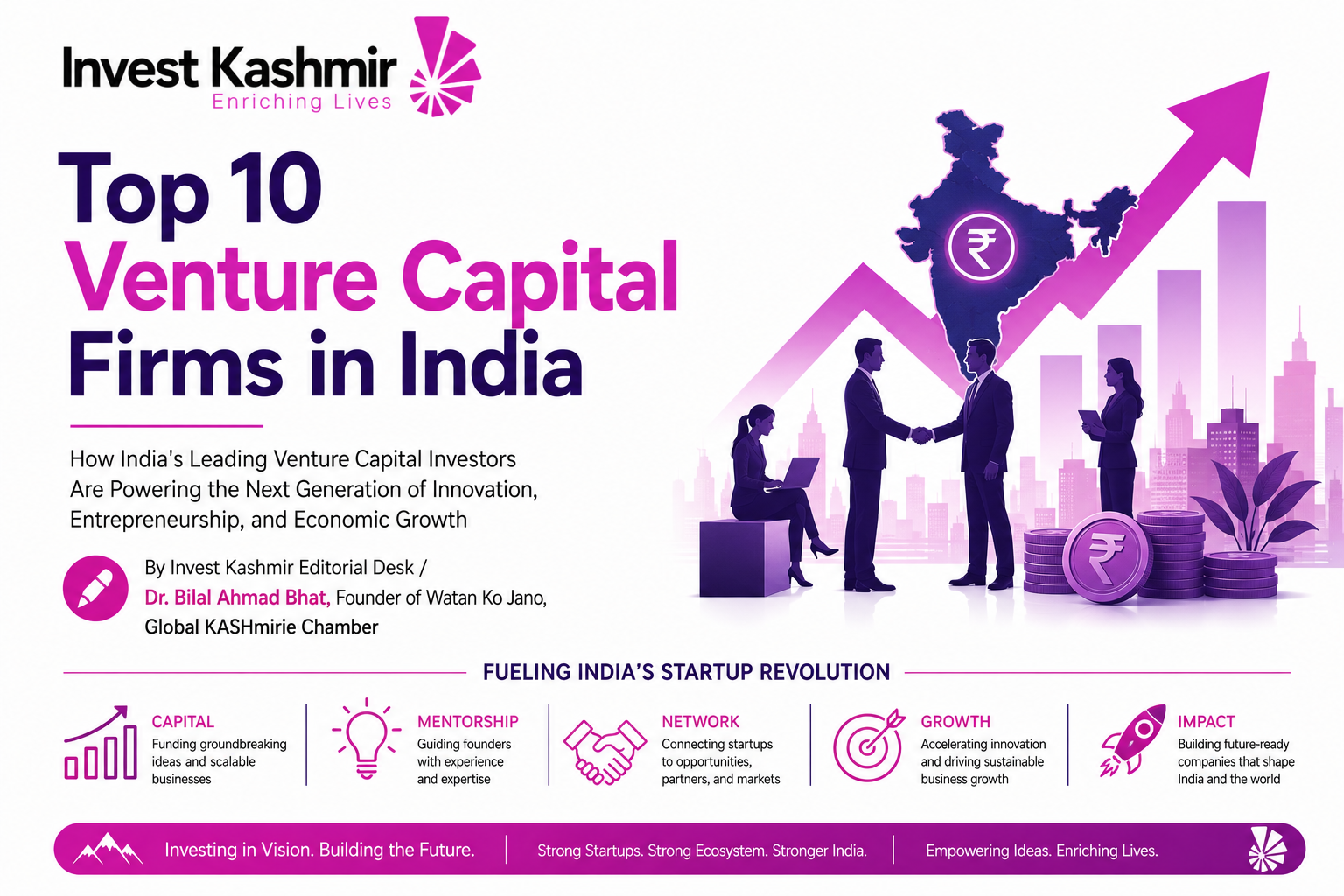
- Venture capital.
- Government grants.
- Strategic partnerships.
- Revenue reinvestment.
Fundraising should accelerate validated businesses rather than replace customer demand.
Stage Eight: Scaling Responsibly
Growth creates new opportunities.
It also introduces new challenges.
Scaling requires:
- Process improvement.
- Leadership development.
- Financial discipline.
- Technology infrastructure.
- Governance.
- Risk management.
Rapid expansion without operational readiness may weaken otherwise successful businesses.
Artificial Intelligence Is Changing Entrepreneurship
Artificial Intelligence has fundamentally transformed startup creation.
Today’s founders can use AI to:
- Analyse markets.
- Improve productivity.
- Automate operations.
- Support customer service.
- Enhance product development.
- Generate business insights.
However, AI does not replace entrepreneurial judgment.
Vision.
Leadership.
Ethics.
Customer understanding.
These remain uniquely human responsibilities.
Why Resilience Matters
Every startup encounters obstacles.
Funding delays.
Product failures.
Competitive pressure.
Economic uncertainty.
Changing customer expectations.
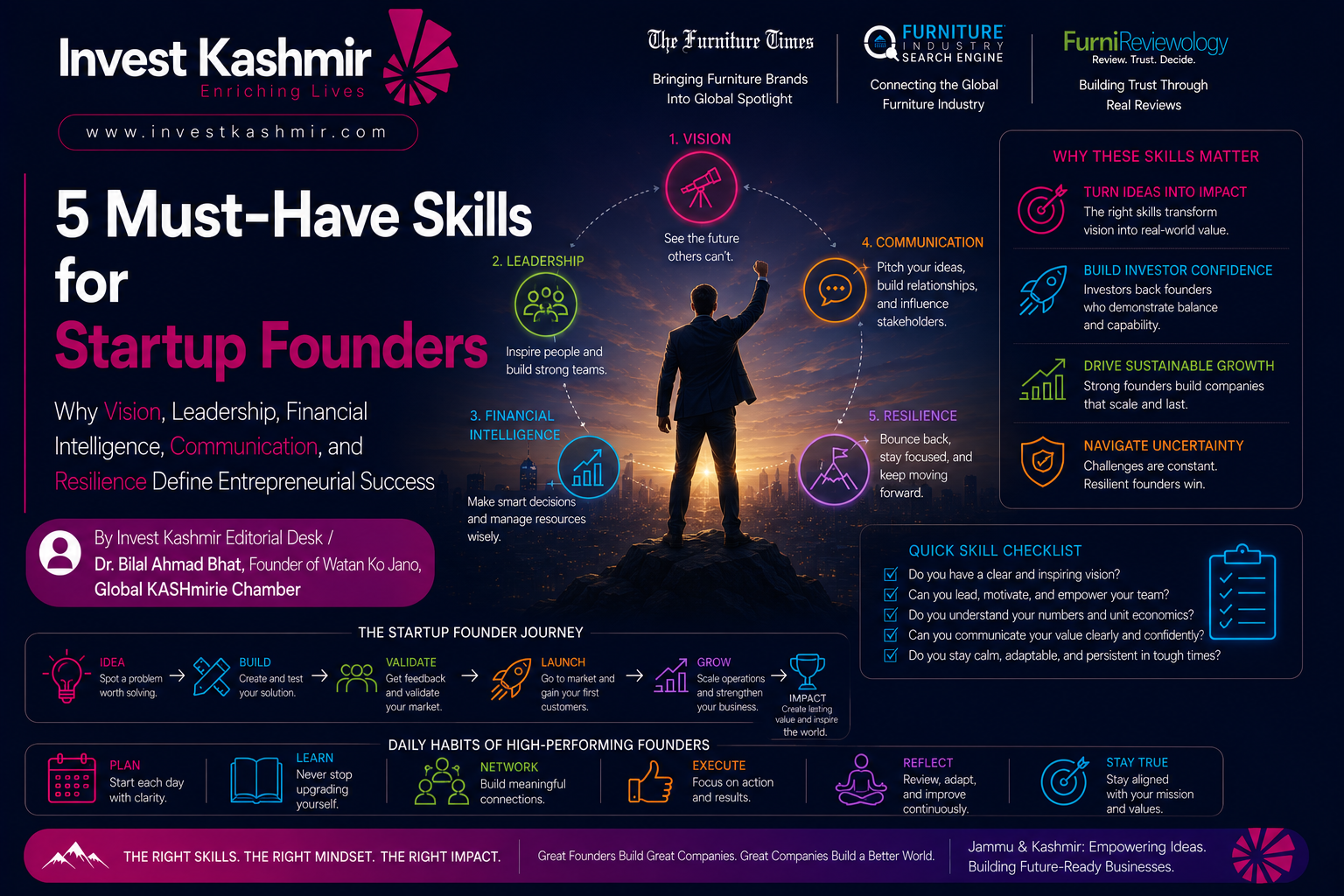
The entrepreneurs who succeed are not those who avoid challenges.
They are those who learn, adapt, and continue moving forward.
Research into startup success consistently identifies resilience, leadership quality, customer focus, and adaptability as critical success factors across entrepreneurial ecosystems.
The Importance of Customers
Investors are valuable.
Technology is valuable.
Capital is valuable.
Customers remain the foundation of every business.
Without customers:
- Revenue disappears.
- Growth stops.
- Investment becomes difficult.
- Innovation loses purpose.
Customer trust remains the most valuable business asset.
Leadership from Zero to One
Founders evolve throughout the entrepreneurial journey.
Initially they create ideas.
Later they build products.
Eventually they lead organizations.
Leadership therefore requires continuous development through:
- Learning.
- Listening.
- Adaptation.
- Communication.
- Integrity.
- Strategic thinking.
Businesses often grow only as quickly as founders grow.
Opportunities for Jammu & Kashmir
Jammu & Kashmir possesses extraordinary entrepreneurial strengths across:
- Tourism Technology.
- AgriTech.
- HealthTech.
- Artificial Intelligence.
- Renewable Energy.
- Food Processing.
- Horticulture.
- Handicrafts.
- Manufacturing.
- Education Technology.
By combining local expertise with global innovation, entrepreneurs can create businesses capable of serving both regional and international markets.
Universities as Innovation Engines
Educational institutions play an essential role by supporting:
- Entrepreneurship education.
- Startup incubation.
- Research commercialization.
- Industry collaboration.
- Innovation competitions.
- Leadership development.
Universities become powerful engines of economic growth when ideas move successfully from classrooms into companies.
Building a World-Class Startup Ecosystem
A thriving entrepreneurial ecosystem requires collaboration among:
- Entrepreneurs.
- Investors.
- Universities.
- Government agencies.
- Incubators.
- Accelerators.
- Financial institutions.
- Industry associations.
- Global partners.
When these stakeholders work together, innovation accelerates and economic opportunities expand.
Looking Ahead
The journey from zero to one is never easy.
It demands courage before confidence.
Learning before mastery.
Discipline before recognition.
Execution before celebration.
The startups that shape tomorrow’s economy will not necessarily begin with the largest investments.
They will begin with founders willing to solve meaningful problems, serve customers consistently, embrace continuous learning, and lead with integrity.
For Jammu & Kashmir, the future of entrepreneurship is filled with extraordinary possibilities.
Its young innovators possess creativity.
Its institutions are expanding support.
Its industries offer enormous opportunities.
Its entrepreneurs are increasingly thinking beyond regional markets.
The next globally recognised company from Jammu & Kashmir may already exist as an idea waiting to be explored.
The next great innovation may begin with a student.
A researcher.
A farmer.
A software engineer.
A healthcare professional.
Or a young entrepreneur determined to create something that has never existed before.
That is the true meaning of going from Zero to One.
It is not simply the beginning of a business.
It is the beginning of transformation.
For founders.
For communities.
For economies.
And for the future itself.